



Indoor Air Quality in Nashville: Solutions for Dust, Allergies, and Pet Dander

Your HVAC system does more than keep your Nashville home warm in winter and cool during summer. It also plays an important role in the quality of the air your family breathes every day.
Dust, seasonal pollen, pet dander, excess humidity, and other airborne particles can build up inside a home. Even frequent cleaning may not solve the problem when contaminants continue circulating through your heating and cooling system.
Improving indoor air quality in Nashville requires looking beyond the thermostat. Air filtration, humidity management, HVAC maintenance, ventilation, and other indoor air quality solutions can all make a difference.
If your home constantly feels dusty or you are looking for ways to reduce common airborne allergens, here are some of the HVAC solutions worth considering.
Why Indoor Air Quality Matters in Nashville
Nashville homeowners experience changing indoor air quality challenges throughout the year.
During spring, outdoor pollen can enter through doors, windows, clothing, and pets. Hot, humid summers can create moisture problems. During colder weather, homes are often closed up for longer periods, which can reduce fresh-air exchange.
Common indoor contaminants can include:
- Dust and fine particles
- Pollen
- Pet dander
- Mold spores
- Smoke
- Household odors
- Volatile organic compounds (VOCs)
Once these contaminants enter your home, your HVAC system may continue circulating some of them from room to room.
The right indoor air quality strategy can help reduce their concentration while supporting a cleaner and more comfortable indoor environment.
1. Start With the Right HVAC Air Filter
Your HVAC filter is one of the simplest tools available for controlling airborne particles.
However, not every filter provides the same level of filtration.
Basic filters primarily protect HVAC equipment from larger debris. Higher-efficiency filters can capture smaller particles, depending on the filter’s MERV rating.
A better filter may help capture particles such as:
- Household dust
- Pollen
- Pet dander
- Some mold spores
However, simply installing the highest MERV filter you can find isn’t necessarily a good idea.
Your HVAC system must be capable of moving enough air through the filter. A filter that creates too much resistance can reduce airflow and place unnecessary strain on the equipment.
An HVAC professional can help determine which filter provides a good balance between filtration and airflow for your particular system.
2. Change Your Filter Regularly
Even a high-quality filter cannot work properly when it becomes clogged.
As dirt and debris accumulate, airflow becomes restricted. Your HVAC system may then need to work harder to move air throughout the house.
A dirty filter can contribute to:
- Weak airflow
- Longer HVAC cycles
- Higher energy consumption
- Reduced comfort
- Additional equipment strain
How frequently you need a replacement depends on your filter, HVAC system, household, and indoor conditions.
Homes with pets or significant dust may require more frequent filter changes.
Checking the filter regularly is a simple habit that can benefit both indoor air quality and HVAC performance.
3. Consider Whole-Home Air Filtration
If standard HVAC filtration isn’t providing the results you want, a whole-home filtration system may be worth considering.
Unlike portable air cleaners that treat a single room, whole-home systems work with your HVAC equipment to treat air as it circulates through the house.
Depending on the system, advanced filtration may help capture smaller particles that pass through basic filters.
This can be particularly useful for households dealing with significant dust, pollen, or pet dander.
The correct solution should be matched to your existing HVAC system so that improved filtration doesn’t create unwanted airflow restrictions.
4. Look at Air Purification Options
Filtration and purification are related, but they aren’t exactly the same.
Filters primarily capture particles. Some air purification technologies are designed to address additional indoor contaminants.
Depending on your home’s needs, an HVAC professional may recommend technologies such as:
- UV lights
- Media air cleaners
- Activated carbon filtration
- Other whole-home purification equipment
For example, properly designed UV systems are often installed near HVAC coils, where they can help control microbial growth on surfaces exposed to moisture.
Activated carbon may be useful when odors or certain gaseous contaminants are a concern.
There isn’t one air purifier that’s best for every home. The right approach depends on what you’re trying to address.
5. Control Nashville’s Indoor Humidity
Humidity is a major part of indoor comfort in Middle Tennessee.
When indoor humidity becomes excessive, your home may feel warmer and less comfortable. Moist conditions can also encourage unwanted biological growth.
Signs of excessive humidity may include:
- A sticky or clammy feeling
- Condensation
- Musty odors
- Moisture problems
- Difficulty maintaining comfort
Your air conditioner naturally removes some moisture while cooling. However, certain homes may need additional humidity control.
A whole-home dehumidifier can work with your HVAC system to manage moisture throughout the property.
Better humidity control can also help you feel more comfortable without continually lowering the thermostat.
6. Don’t Ignore Your Ductwork
Your ducts transport conditioned air throughout your home. Their condition can therefore have a major effect on both comfort and air quality.
Leaks in ducts located in attics, crawl spaces, or other unconditioned areas may allow unwanted particles to enter the air distribution system.
Problems may include:
- Loose connections
- Damaged flexible ducts
- Gaps around joints
- Poor sealing
- Damaged insulation
If your home seems unusually dusty even though you clean regularly, it may be worth having the duct system inspected.
Professional duct sealing can help reduce unwanted air infiltration while also preventing conditioned air from escaping.
That can benefit both indoor air quality and energy efficiency.
7. Address Pet Dander at the HVAC Level
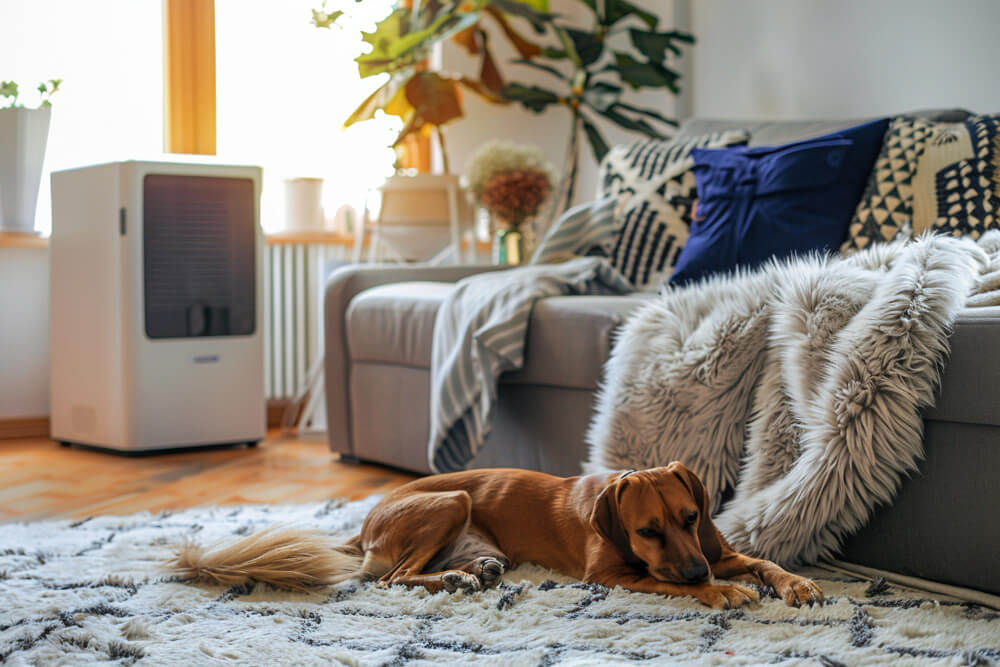
Pets are part of the family, but they also introduce additional hair and dander into the home.
Pet dander consists of very small particles that can become airborne and circulate throughout living spaces.
If you have dogs or cats, consider combining several strategies:
- Vacuum frequently
- Clean pet bedding regularly
- Check HVAC filters more often
- Use appropriate whole-home filtration
- Keep return-air areas clean
An HVAC professional can evaluate whether upgrading filtration would help your particular system manage airborne pet-related particles more effectively.
8. Keep Your HVAC System Maintained
Indoor air quality equipment works best when the HVAC system itself is clean and operating properly.
Routine maintenance can include inspecting and servicing components such as:
- Air filters
- Evaporator coils
- Blower components
- Condensate drains
- Outdoor equipment
- Electrical components
- Airflow
Moisture or dirt around certain HVAC components can create conditions you don’t want inside an air distribution system.
Regular maintenance also gives your technician an opportunity to identify developing problems before they affect comfort or lead to more expensive repairs.
For Nashville homeowners, scheduling HVAC service before the major heating and cooling seasons is a practical approach.
9. Consider Fresh-Air Ventilation
Modern homes can be relatively airtight, which is helpful for energy efficiency. However, reduced natural ventilation can also allow indoor contaminants and odors to accumulate.
Opening windows isn’t always practical, particularly during high-pollen days or hot and humid Nashville weather.
A professionally designed mechanical ventilation solution can introduce controlled amounts of outdoor air while helping manage the impact on heating and cooling efficiency.
Whether this is necessary depends heavily on the construction and air-tightness of your home.
Which Indoor Air Quality Solution Is Best?
There’s no single product that solves every indoor air quality concern.
A home with excessive pet dander may need improved filtration. Another property may have a humidity problem. A third may have leaking ductwork that continually pulls contaminants from an attic or crawl space.
That’s why the first step should be identifying the source of the problem.
Depending on what an evaluation finds, the solution may involve:
- Better HVAC filtration
- Whole-home air purification
- UV equipment
- Humidity control
- Duct sealing
- Ventilation improvements
- Routine HVAC maintenance
In some cases, combining several approaches provides the best result.
Improve Indoor Air Quality With South Nashville Heating & Cooling
If you’re constantly fighting dust, concerned about pollen and pet dander, or simply want cleaner air throughout your home, South Nashville Heating & Cooling can help you evaluate your options.
We can inspect your HVAC system and recommend solutions based on the actual needs of your home rather than simply adding equipment you may not need.
Our team can help with HVAC filtration, air purification, humidity control, ductwork, heating and cooling maintenance, repairs, and system improvements.
Better indoor air quality starts with understanding how air moves through your home and identifying the issues affecting it.
Fill out the form below to contact South Nashville Heating & Cooling and schedule an indoor air quality evaluation. We’ll help you determine which solutions make sense for your Nashville home so you can enjoy a cleaner, more comfortable indoor environment.
South Nashville HVAC — “We Keep Your Comfort In Tune!”Contact Us