




Whole-Home Humidifiers in Nashville: Do You Need One in Winter?

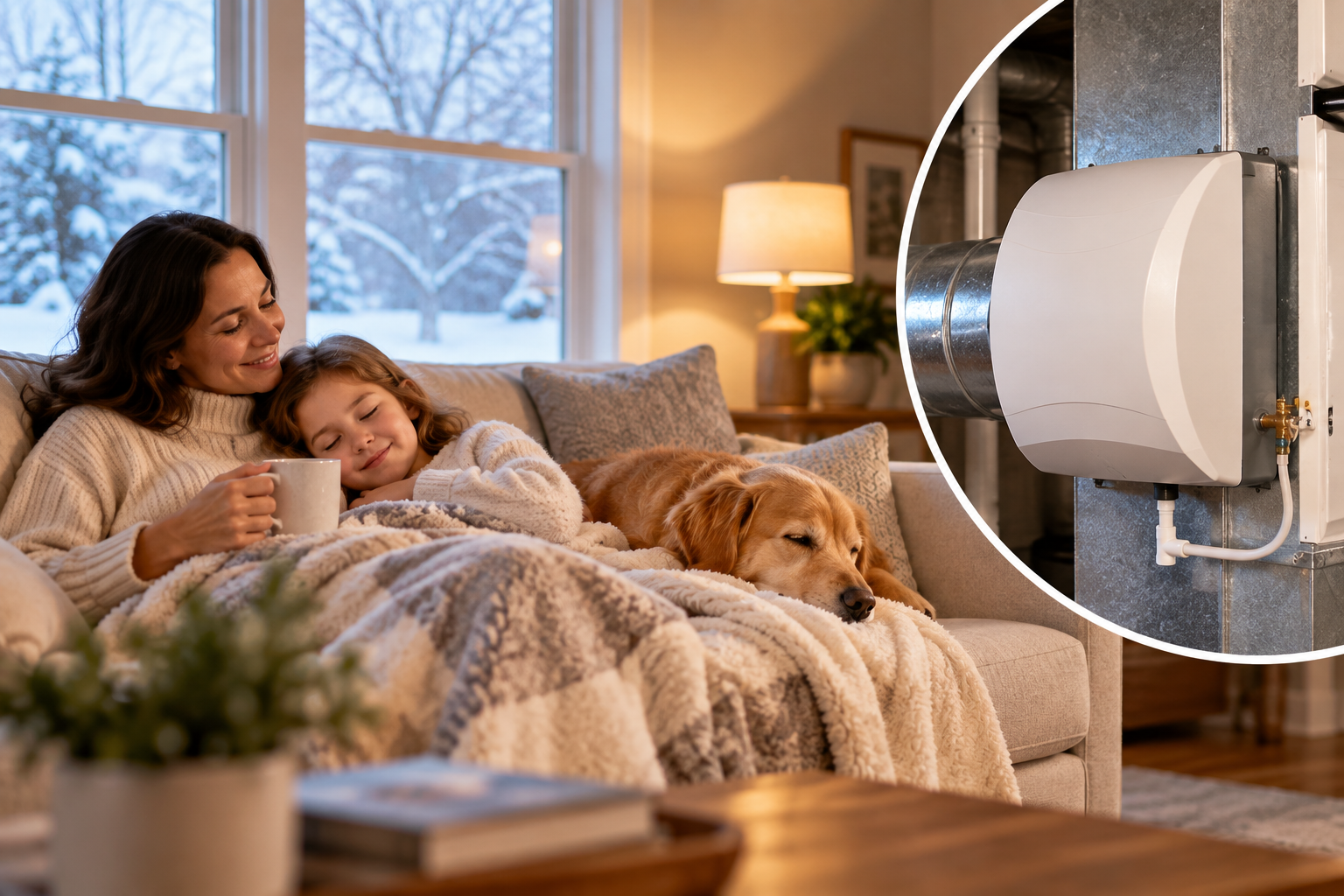
Nashville summers are known for humidity, so adding moisture to your home’s air might sound unnecessary. However, winter creates a very different indoor environment.
As outdoor temperatures fall and your heating system runs more frequently, the air inside your home can become noticeably dry. You may experience dry skin, static electricity, irritated sinuses, uncomfortable rooms, or even changes in wood flooring and furniture.
That’s where a whole-home humidifier in Nashville can help.
Unlike small portable humidifiers designed for one room, a whole-home humidifier works with your HVAC system to manage humidity throughout the house. But does every Nashville home need one?
Let’s look at how winter heating affects indoor humidity, the signs that your home may be too dry, and when installing a whole-home humidifier makes sense.
Why Does Indoor Air Become Dry During Winter?
Cold winter air naturally contains less moisture than warm air. When that outdoor air enters your house and is heated, its relative humidity can drop considerably.
Your furnace or heat pump doesn’t necessarily “remove” all that moisture. Instead, heating cold, dry outdoor air lowers its relative humidity.
The result can be indoor air that feels dry even when your thermostat says the temperature is comfortable.
Air leakage can make the problem worse. Older homes or houses with gaps around windows, doors, attics, and other areas may continually bring dry outdoor air inside.
The more your heating system operates, the more noticeable dry-air problems can become.
What Is a Whole-Home Humidifier?
A whole-home humidifier is an HVAC accessory designed to add controlled moisture to the air distributed throughout your home.
Instead of filling a small water tank every day and moving a portable humidifier from room to room, a professionally installed whole-home unit connects to your HVAC system and water supply.
Depending on the equipment, the humidifier introduces moisture into the airflow before your ductwork distributes conditioned air around the house.
A humidity control, sometimes called a humidistat, helps regulate how much moisture is added.
The goal isn’t to make your home humid. It’s to maintain a comfortable indoor humidity level without introducing excessive moisture.
Signs Your Nashville Home May Be Too Dry
You don’t necessarily need special equipment to notice that indoor humidity has fallen too low.
Common signs include:
- Frequent static electricity
- Dry or itchy skin
- Dry throat or nasal passages
- Cracking or shrinking wood
- Gaps appearing in hardwood flooring
- Dry-feeling indoor air
- Houseplants drying faster than expected
If several of these problems consistently appear when your heating system begins running in winter, low indoor humidity could be contributing.
However, symptoms alone don’t prove that humidity is the cause. Measuring indoor relative humidity with a hygrometer gives you much more useful information.
What Indoor Humidity Level Should You Aim For?
Many homes are comfortable with indoor relative humidity somewhere around 30% to 50%, although the appropriate setting depends on outdoor temperatures, the home’s construction, and whether condensation appears on windows or other cold surfaces.
During very cold weather, a lower humidity setting may be necessary.
That’s important because more humidity isn’t always better.
If indoor humidity becomes excessive, moisture can collect on:
- Windows
- Exterior walls
- Cold surfaces
- Poorly insulated areas
Too much moisture can contribute to mold growth and other building-related problems.
A properly installed whole-home humidifier should therefore be controlled rather than simply adding moisture continuously.
Whole-Home Humidifier vs. Portable Humidifier
Portable humidifiers can be useful when you only need humidity in a specific bedroom or living area.
They’re relatively inexpensive and don’t require HVAC installation.
However, they also have limitations.
Portable units generally require regular:
- Refilling
- Cleaning
- Disinfecting
- Filter or component maintenance
Neglected portable humidifiers can become dirty, which is exactly what you don’t want from equipment affecting your indoor air.
A whole-home system, on the other hand, is designed to manage humidity across a much larger portion of the house automatically.
For homeowners experiencing dry-air problems throughout several rooms, whole-home humidity control can be more convenient.
Benefits of a Whole-Home Humidifier
More Comfortable Winter Air
Proper humidity can make heated indoor air feel more comfortable.
When the air becomes extremely dry, even a properly heated room may feel less comfortable than expected.
Balanced humidity helps create a more pleasant indoor environment without simply raising the thermostat.
Less Static Electricity
If you constantly receive small shocks after walking across carpeting or touching metal objects during winter, dry air may be responsible.
Adding controlled humidity can reduce static buildup.
Helps Protect Wood Inside Your Home
Wood responds to changes in moisture.
Very dry indoor conditions can cause certain wood materials to shrink or develop gaps. That may affect:
- Hardwood flooring
- Furniture
- Cabinets
- Trim
- Musical instruments
Maintaining more stable indoor humidity can help reduce extreme seasonal moisture fluctuations.
Whole-Home Convenience
One of the biggest advantages is convenience.
Rather than maintaining several portable units around the house, one HVAC-integrated system can help manage humidity throughout areas served by the duct system.
Can a Humidifier Help With Winter Comfort?
It can, particularly when your home’s indoor humidity is genuinely too low.
However, a humidifier shouldn’t be viewed as a solution for every winter comfort problem.
If certain rooms are cold, the underlying issue might instead involve:
- Leaky ductwork
- Poor insulation
- Air infiltration
- HVAC sizing
- Weak airflow
- Thermostat problems
That’s why evaluating the entire heating system is important before assuming humidity is the only issue.
Do Heat Pump Homes Need Humidifiers?
They can.
Low winter humidity isn’t limited to homes with gas furnaces. Heat pump homes can also experience dry indoor conditions because the issue is strongly related to outdoor air, indoor heating, air leakage, and the building itself.
Whether your Nashville home uses a furnace, heat pump, or another heating system, actual indoor humidity measurements are more useful than the type of equipment alone when deciding whether you need a humidifier.
Is a Whole-Home Humidifier Right for Every Nashville Home?
No.
Some homes naturally maintain comfortable winter humidity without additional equipment.
Newer, tighter homes may retain moisture differently than older properties with significant air leakage. Household activities such as cooking, showering, and laundry also add moisture to indoor air.
Before installing a humidifier, it’s smart to determine your home’s actual humidity levels.
If humidity remains comfortable throughout winter, there’s little reason to add unnecessary moisture.
If humidity regularly falls too low and you’re experiencing related comfort problems, a whole-home humidifier may be worth considering.
Don’t Forget Humidifier Maintenance
Like the rest of your HVAC equipment, whole-home humidifiers require maintenance.
Depending on the system, service may include:
- Replacing water panels or pads
- Cleaning mineral deposits
- Checking water lines
- Inspecting drains
- Testing humidity controls
- Checking for leaks
Water quality can also influence how quickly mineral deposits develop.
Regular inspection helps keep the humidifier operating correctly and reduces the risk of unwanted moisture problems.
Humidity Is Only One Part of Indoor Air Quality
A comfortable Nashville home requires more than temperature control.
Depending on your household, a complete indoor air quality strategy may include:
- Proper HVAC filtration
- Whole-home air cleaners
- Humidity control
- Dehumidification
- Duct sealing
- Ventilation
- Routine HVAC maintenance
Interestingly, Nashville homes may need different moisture strategies depending on the season.
During humid summer weather, reducing indoor moisture can be important. During winter, some homes may have the opposite problem and benefit from carefully controlled humidification.
The right solution depends on your home rather than a one-size-fits-all recommendation.
Professional Whole-Home Humidifier Installation in Nashville
Installing a whole-home humidifier involves more than attaching equipment to the ductwork.
The system needs to be correctly selected, installed, drained, supplied with water, and integrated with your HVAC equipment and controls.
At South Nashville Heating & Cooling, we can evaluate your home’s winter comfort and indoor air quality concerns before recommending equipment.
We can help determine whether dry air is actually the problem and whether a whole-home humidifier is appropriate for your HVAC system.
Our team can also evaluate related issues such as airflow, filtration, ductwork, heating performance, and overall indoor air quality.
Does Your Nashville Home Need a Whole-Home Humidifier?
If your home becomes noticeably dry every winter, a whole-home humidifier may provide a convenient way to maintain more comfortable indoor humidity.
The key is controlled humidity.
You don’t want to add as much moisture as possible. You want to maintain an appropriate level based on your home, outdoor conditions, and HVAC system.
Start by measuring your indoor humidity. If it’s consistently low and you’re experiencing dry-air problems, a professional HVAC evaluation can help determine the next step.
Fill out the form below to contact South Nashville Heating & Cooling. Our team can evaluate your home’s indoor humidity, heating system, and overall comfort and help you decide whether a whole-home humidifier is right for your Nashville property.
South Nashville HVAC — “We Keep Your Comfort In Tune!”